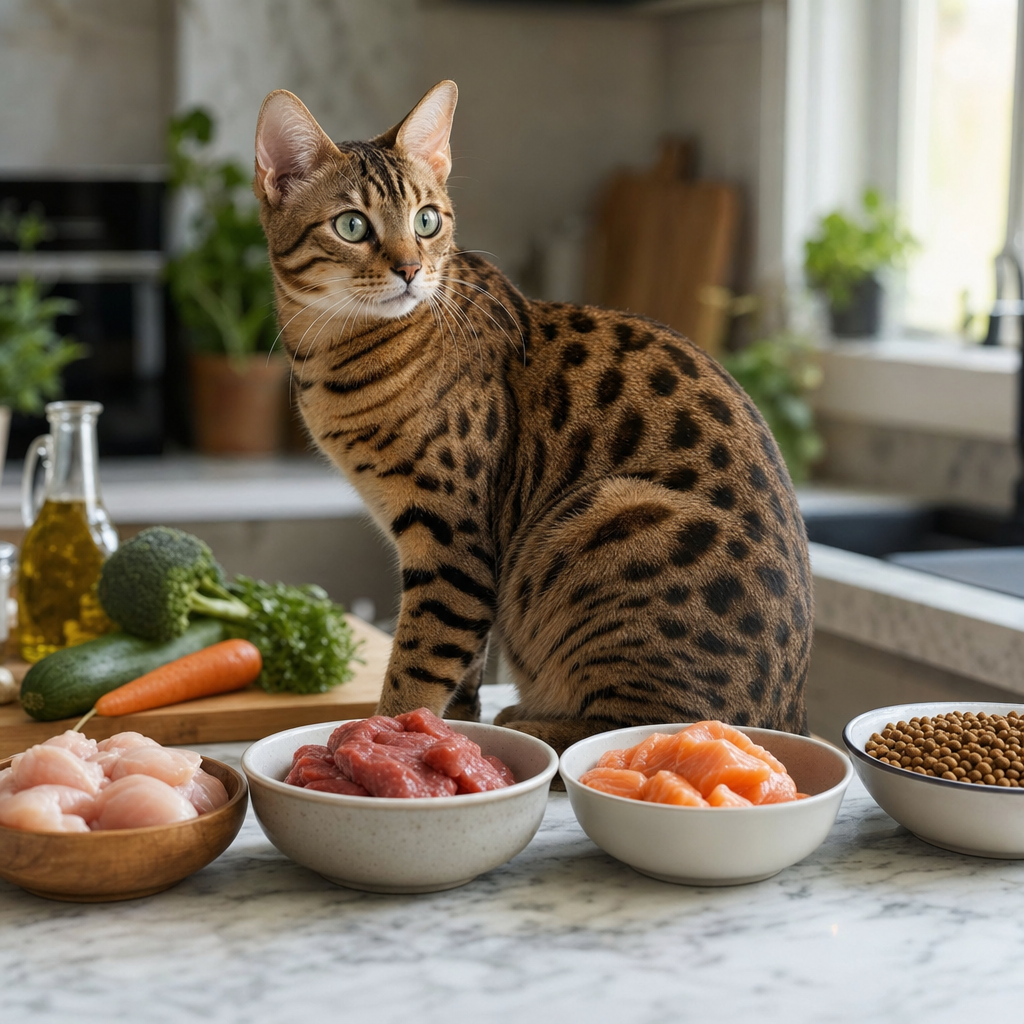
The Ultimate Bengal Cat Diet Chart: What to Feed by Age & Weight
Bengal cats, known for their striking appearance and vibrant energy, require a balanced diet to keep them in top health. Understanding what to feed your Bengal cat at different stages of their life is crucial. This comprehensive Bengal cat diet chart will guide you through dietary needs based on age and weight. Let’s dive in!
Bengal Cat Feeding Basics
Before we explore specific diet charts, here are some essential feeding principles for Bengal cats:
- High-Protein: Bengals thrive on diets rich in protein. Choose foods with real meat as the primary ingredient.
- Hydration is Key: Wet food helps maintain hydration levels, preventing urinary tract issues.
- Avoid Fillers: Steer clear of foods with excessive fillers like corn and soy.
Bengal Kitten Diet Chart: 0-12 Months
During the first year, Bengal kittens experience rapid growth and require a diet rich in nutrients to support their development.
- 0-3 Months: Incorporate high-quality kitten formula and start introducing wet and dry kitten food.
- 3-6 Months: Gradually increase the quantity of solid food while ensuring it’s protein-rich and balanced.
- 6-12 Months: Transition to a regular feeding schedule with 3-4 meals a day, focusing on quality kitten food.
Adult Bengal Cat Diet Chart: 1-7 Years
Adult Bengals require a maintenance diet that keeps up with their active nature.
- Weight 8-10 lbs: Feed 2-3 cans of high-protein wet food daily, optionally supplement with dry food.
- Weight 11-15 lbs: Increase intake to 3-4 cans of wet food daily, ensuring calorie needs are met.
Senior Bengal Cat Diet Chart: 8+ Years
As Bengals age, their diet may require adjustments to accommodate changes in metabolism and activity levels.
- Weight 8-10 lbs: Lower calorie intake slightly; consider foods formulated for senior cats.
- Weight 11-15 lbs: Provide 2.5-3 cans of wet food daily, focusing on easy-to-digest formulas.
Special Dietary Considerations
Consider these additional tips when planning your Bengal cat’s diet:
- Monitor Weight: Regularly weigh your Bengal to adjust portion sizes accordingly.
- Sensitive Stomachs: Some Bengals may have food sensitivities; consult your vet if you notice digestive issues.
- Treats: Limit treats to prevent obesity and use them for training or special occasions.
Conclusion
Ensuring your Bengal cat receives a nutritious and balanced diet at each life stage is crucial for their health and happiness. Use this Bengal cat diet chart as a guide, and always consult with your veterinarian for personalized advice. A well-fed Bengal is a happy, healthy companion!